
Year-over-year save percentage is more predictive than it’s given credit for. But that doesn’t mean it’s a statistic that tells the full story of how capable a goalie is.
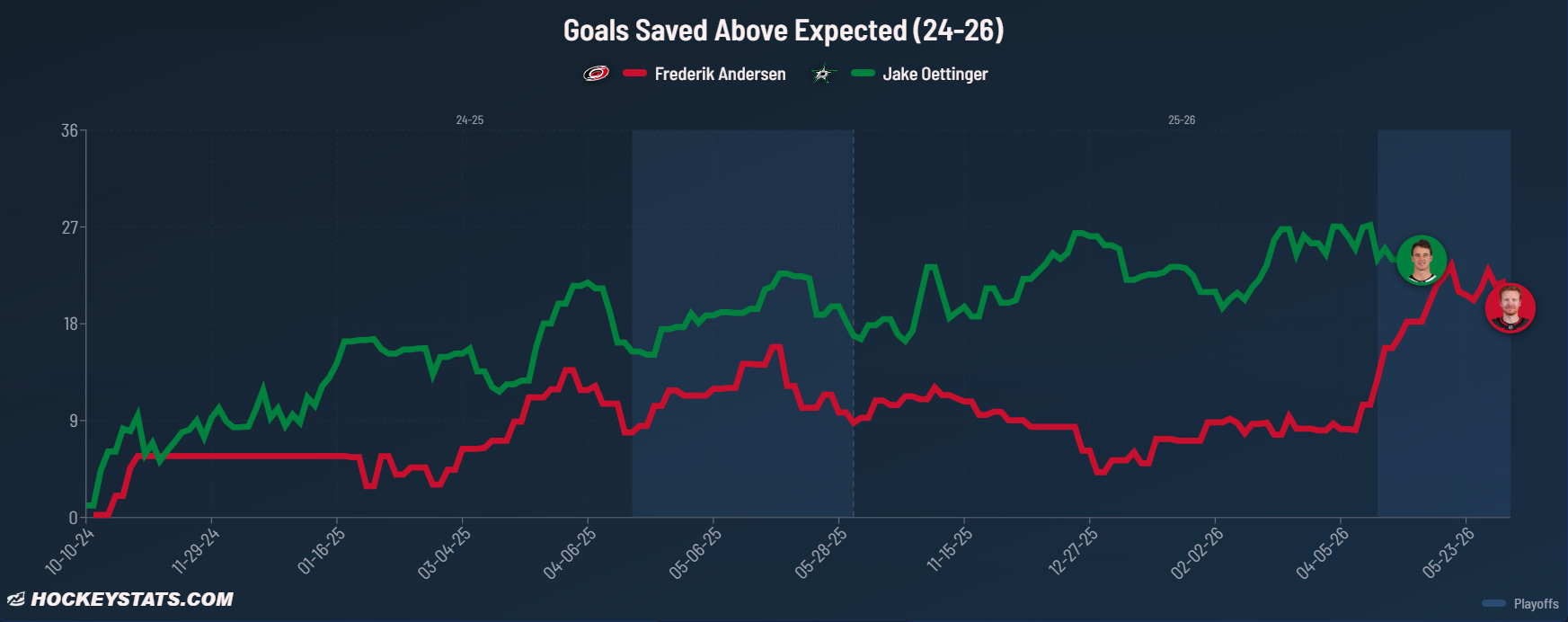
Goals saved above expected (GSAx) has become a popular metric in recent years to account for environment. It’s calculated by subtracting actual goals from expected goals (read more about expected goals here), and the higher a goaltender ranks, the better. Logan Thompson led the league in 2025-26, according to Evolving Hockey’s model.
GSAx is a better metric for determining who the best goaltender is than pure save percentage, since not every shot is created equal.
Expanding on that thinking, which goalies had the easiest and most difficult environments based on expected goals per shot attempt? Let’s look at those numbers and the individual goaltenders. Are they due for positive or negative regression?
Goalie Environments & The Goalies Who Stick Out
Here’s a look at the 68 netminders who faced 500 unblocked shot attempts at 5-on-5 play last season, ranked from highest to lowest by expected goals against per shot on goal they faced, courtesy of Evolving-Hockey.
Frederik Andersen
The above results are what you’d mostly expect. Frederik Andersen was a supreme outlier, explaining his career-low .874 save percentage. He’s a legitimately solid starter, so even though the Edmonton Oilers are a worse defensive team than the Carolina Hurricanes, the Danish netminder should improve in 2026-27. His environment was fluky.
Stuart Skinner split the 2025-26 season between the Oilers and the Pittsburgh Penguins, and you’ll notice that he’s right behind Andersen. Edmonton has its own issues, but defensive improvement is realistically the only path forward. I’m high on the 36-year-old.
